pictures
Recently I decided what was really lacking in my life was yet another activity which demands a lifetime to master, to obsess over and occupy all the free time that is already completely occupied by all my other interests. So I got myself a camera.
I never gave photography much consideration: though I always have liked the visual arts0, I just did not have the time one would need to properly invest in them, much as I wish I did, and my complete inability to take on an activity without obsessively setting extremely high demands on the quality of the results1 kept me from giving it much thought.
But some years ago I created a page to write about my travels, which is in a way the precursor to this page. Although the primary medium there is writing (Instagram has given humanity enough travel pictures devoid of content), I also include pictures to make the stories there more vivid. Those pictures were taken with the only means I had: my cellphone2. While that provided a great opportunity to learn to make the best out of every picture3, I became increasingly frustrated with the discrepancy between what I saw in person and what ended up in the photographs.
So I finally conceded. Promising myself I would not develop another obsession (though it was hopeless), after a brief research for “beginner camera” I bought the cheapest I could find that looked functional and fulfilled my amateur requirements4.
All of this is to say: do not expect anything amazing. Like the music I record (everything I do, really), I am not a professional and have no intention of becoming one, this page is for the Muses, ars gratia artis, and a celebration of the beauty of the world and our gift and priviledge of being capable of contemplating it. Enjoy.
licence
It feels a bit ridiculous to write this on a page for amateur photography, but since it has to be stated: all pictures hosted here were taken by myself (and for myself) with my own equipment and are free to use by anyone for any purpose without any cost, though it would be nice to be notified and mentioned (well, and paid, but a link to this web site is enough) in case they are used.
equipment
Listed here mostly for completeness/curiosity, since it is very boring to anyone who knows anything about photography. There is nothing special about what I use, they are just cheap (relatively speaking, considering the price range of cameras and accessories), entry-level equipment, bought from regular photography shops in Italy.
-
camera: Canon EOS 250D (€600). At least that is how it is called here in Europe, for some reason it also has several other names, depending on the region: EOS 200D Mark II, EOS Rebel SL3, Kiss X10.
-
lens: Canon EF-S18-55mm f/4–5.6 IS STM (€60). Also very unsurprising: it is (the latest model of) the lens which usually accompanies this camera. Not the greatest lens, but it does the job.
-
telephoto lens: Tamron 16–300mm f/3.5–6.3 Di II VC PZD MACRO (€350, used). A more recent addition, somewhat unexpected5. Like the Cannon lens, it is very decent for the price and enough for my level of proficiency. Because its extremely wide range of focal length and aperture encompass that of the other lens (one of the deciding factors for the purchase), this is the one I use almost all the time, unless the extra size and weight are not justified.
-
tripod: K&F Concept tripod (€30). A good “travel” tripod, with universal attachments for cameras and phones. It is quite solid and has a good range (48-190cm) while being very portable (4kg, easily carried attached to a backpack).
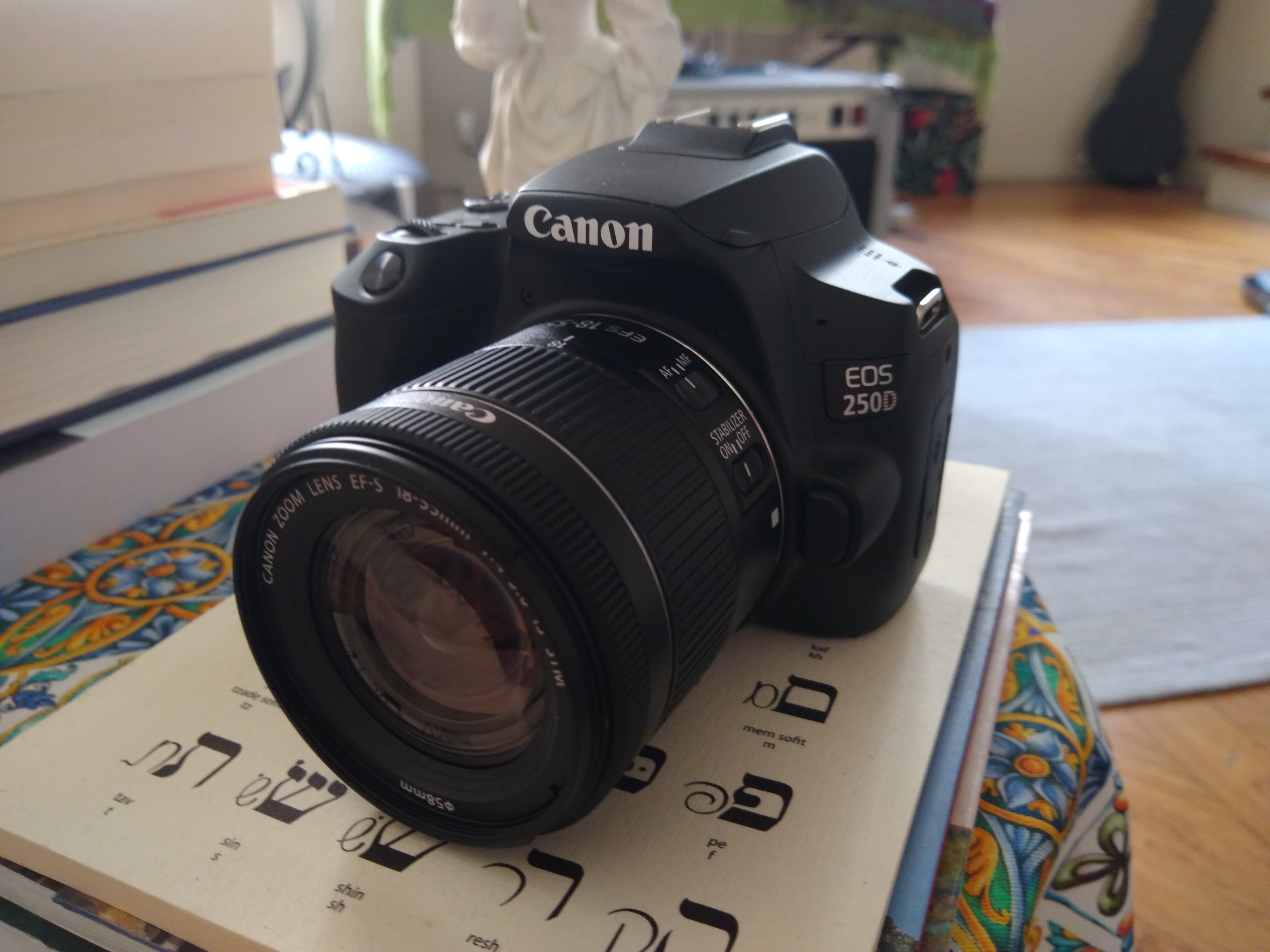
I have to say I am very satisfied with this setup. Any DSLR is going to be a significant improvement over a phone camera6, but I find I can achieve very good results in almost any circumstance. Just as with musical instruments, the ideal state is where the equipment is slightly ahead of the operator.
software
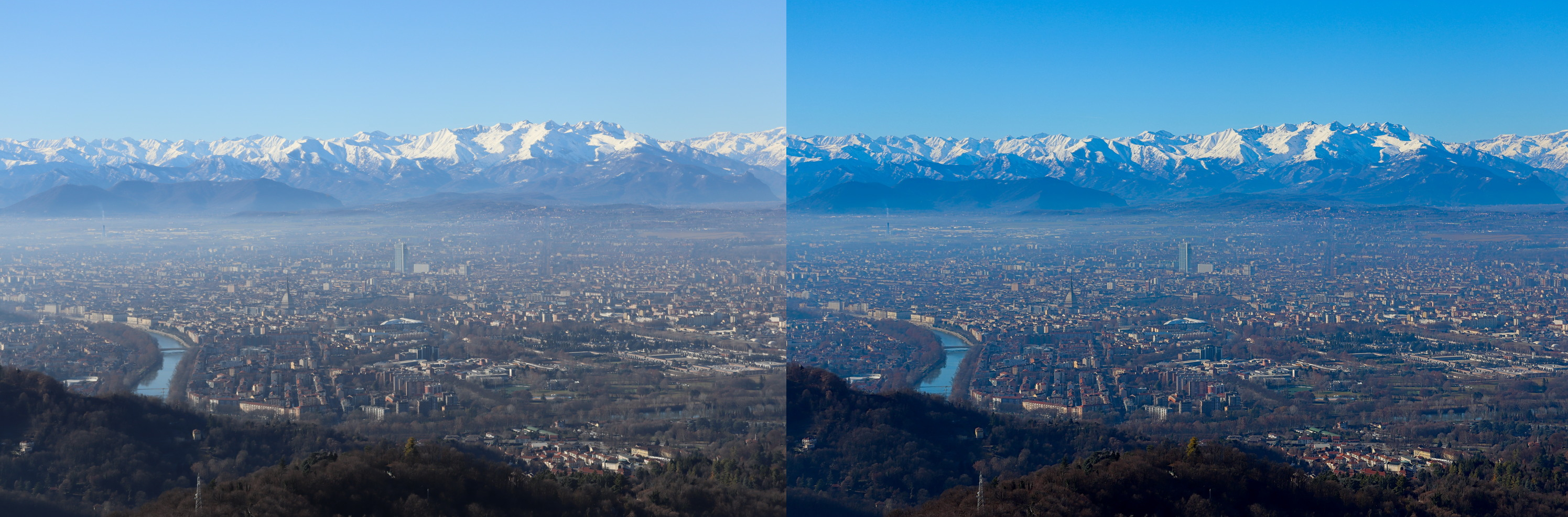
I have one simple guiding principle when it comes to editing pictures: to try to make them as faithful to what my eyes saw as possible. I dislike the heavily-processed style which produces images that are unnaturally “spectacular” or “eye-catching”: the real world is already spectacular enough.
While it is very rare that a picture will come out perfect straight from the camera without any modifications, I limit myself to lightly adjusting those aspects which the eye is much better at processing than a camera sensor: lighting contrast, depth and variation of color, image sharpness, etc.
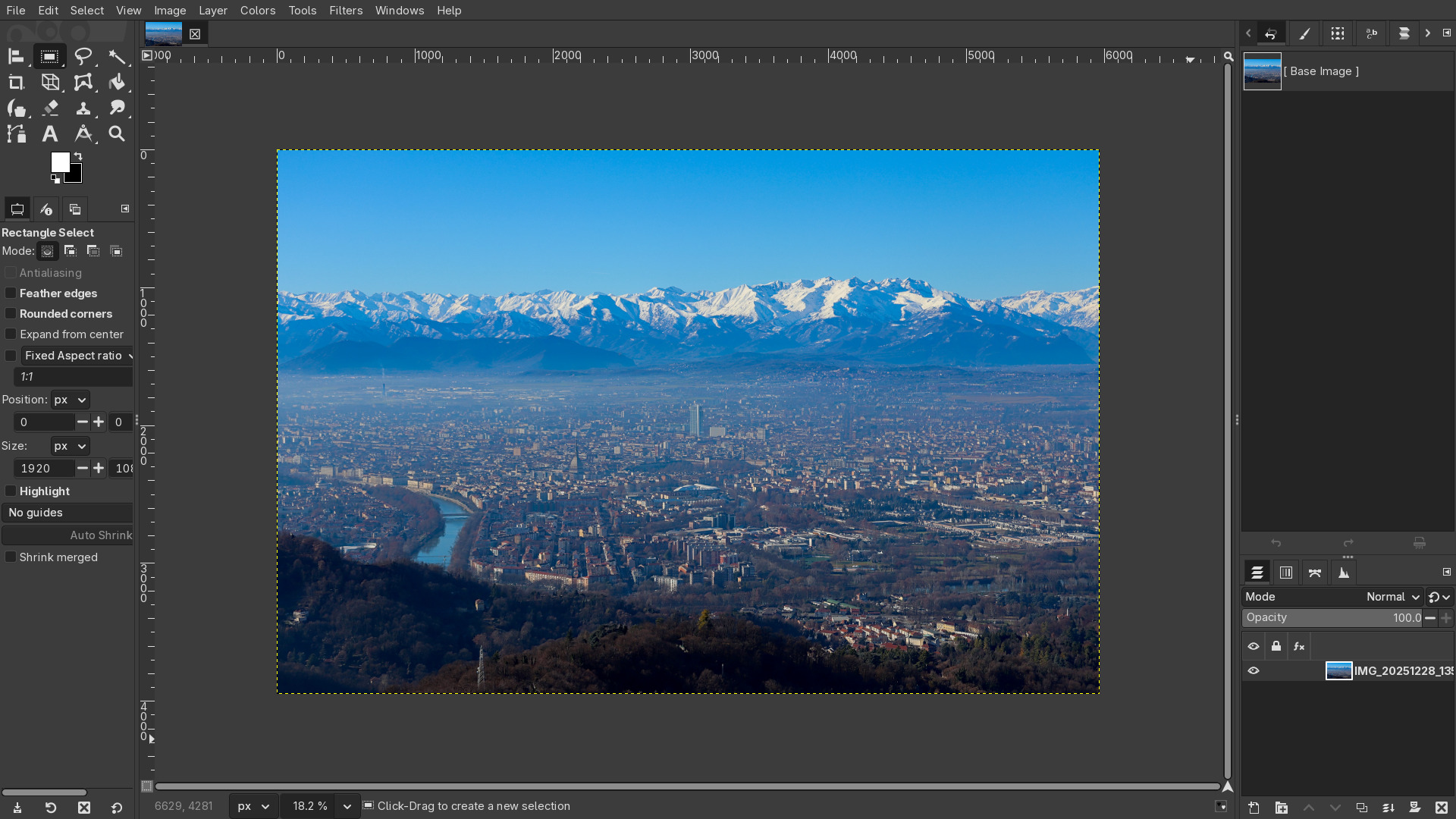
Just as with music, I use only free and open-source software for this (that page also describes how I edit videos, though they are not as common here). For the longest time, I used only GIMP, an amazing piece of software which I use daily for all types of image editing.
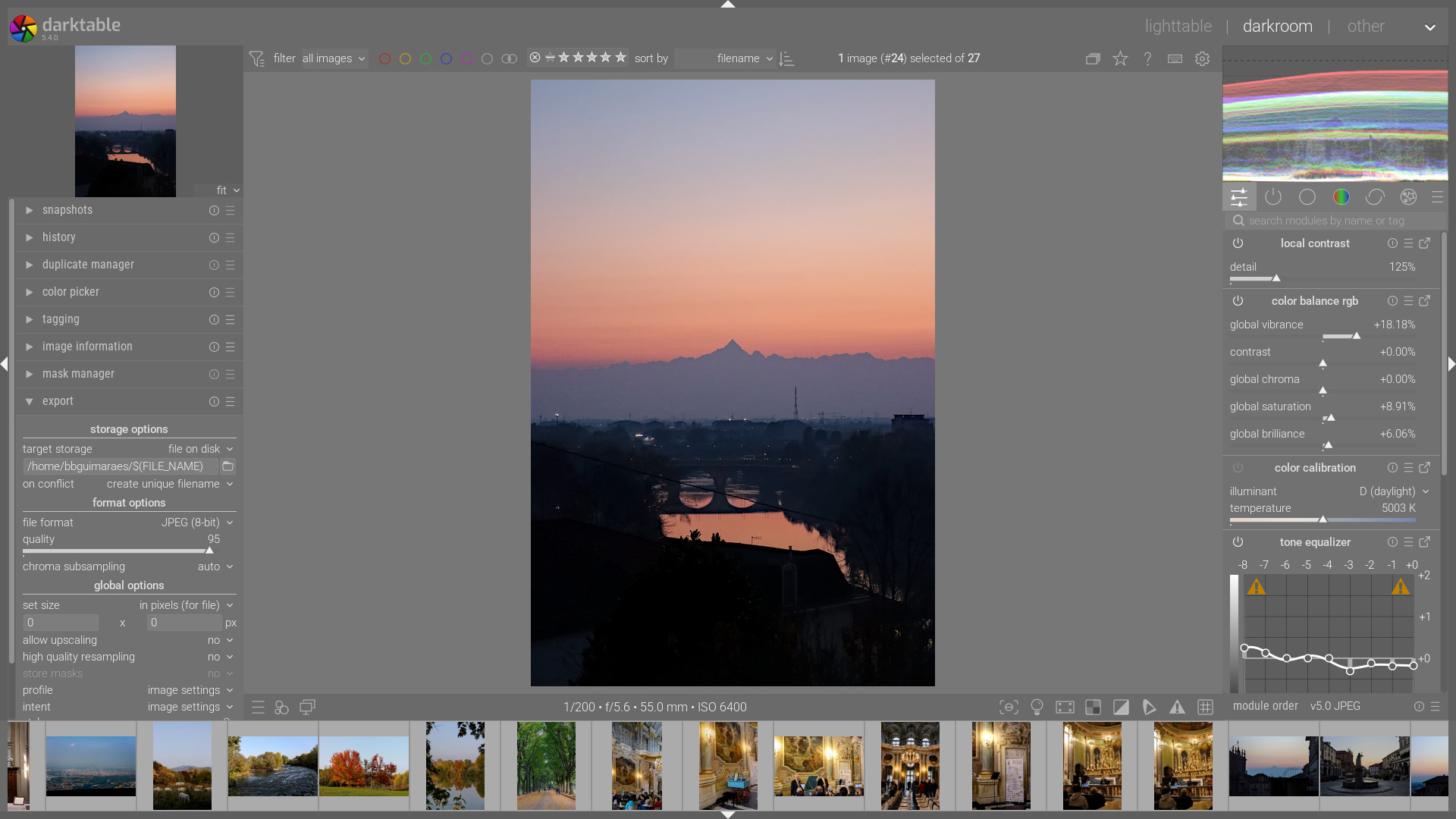
More recently I discovered darktable, which is designed specifically for photography, instead of general image editing. I have been liking and using it more and more (sometimes in combination with GIMP). The interface is excellently done and it processes images very efficiently. I especially like how different effects can be iteratively edited independently and are combined in the final image.
Hugin is a tool to merge multiple pictures. It can be used to connect them to form a panoramic view, combine pictures at different exposition levels in a high-dynamic-range image, etc. It required a bit of study and experimentation, but by now it is an essential tool for me. One excellent aspect of it is its ability to be scripted, which saves a lot of time in common operations.
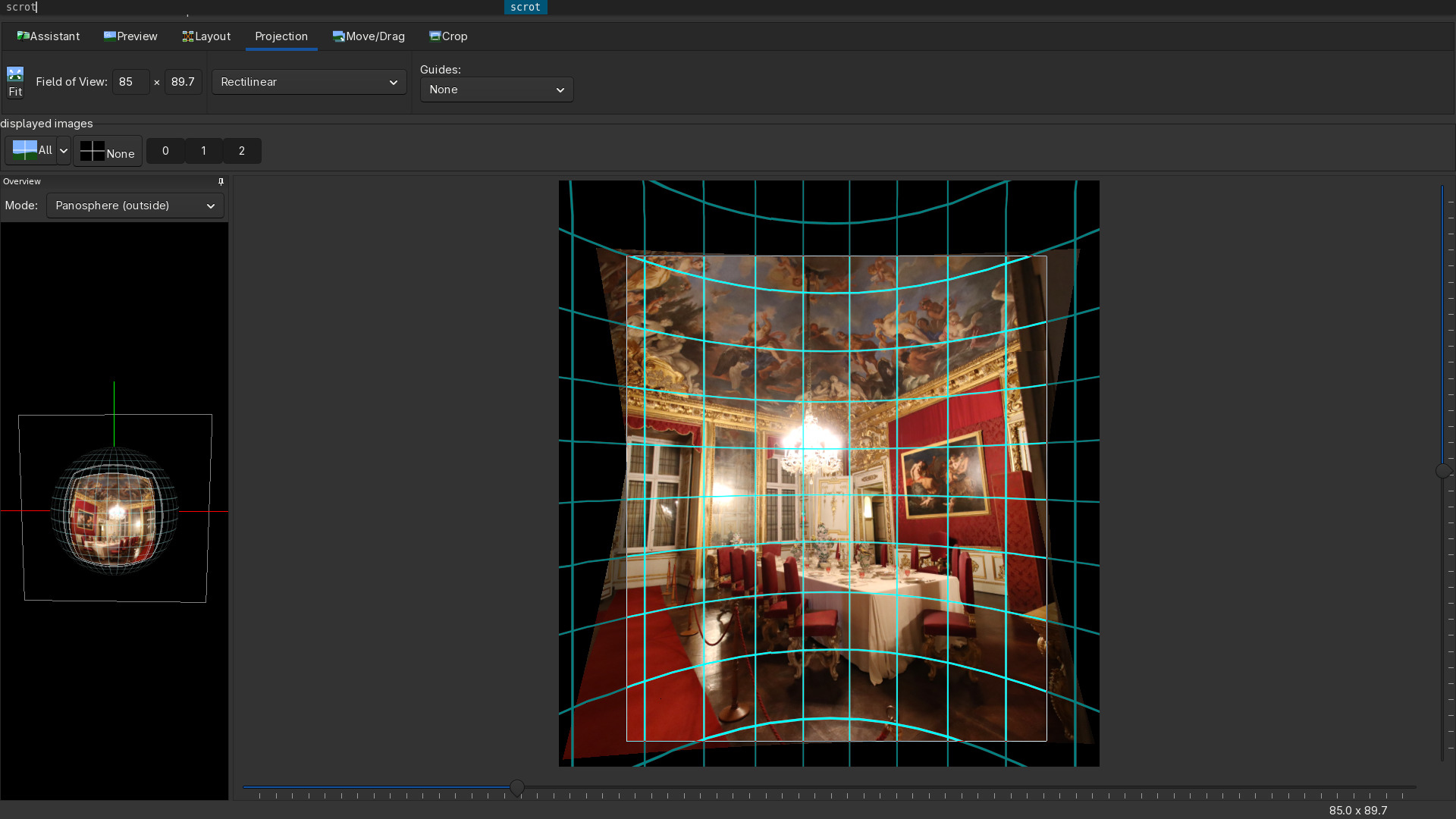
And there is not much more to it, other than a few home-made scripts to transfer pictures from the camera's SD card, name them according to the EXIF data, resize them for previews in this web site, etc.
notes
-
^
Drawing, painting, calligraphy, craft, architecture, sculpture, carving, ceramics, I like them all.
-
^
In case you are not a perfectionist and do not know how our mind works.
-
^
Which, following my philosophy — i.e. buy the cheapest that is usable and keep it until it disintegrates — has a camera that is medium-quality at best.
-
^
As you can see from every one taken before September 2025.
-
^
I.e.: DSLR, compatibility with various lens, decent video recording and low-light shooting, the ability to be operated in completely manual mode.
-
^
Here is the story: I knew from the start I would buy a telephoto lens at some point. One day I decided to do some prospective research just to know what cost to expect and where to place it in my priority list. This is the model I chose, after looking at literally hundreds of others. I then decided to take a quick look at the website of the local photography shop (Grande Marvin, I recommend it) and, what do you know, they had this exact model, used, with this very appealing price and a one-year warranty. I took it as a divine sign and bought the lens the next day.
-
^
Which is not to denigrate the technical wonder those things are, considering the incredibly tight physical constraints.
-
^
Note for example how the fog and the overly-bright snowy mountain tops hid details and skewed the color balance, all photographic phenomena not seen in person, which is what I believe image editing should correct.